
Polynucleotides in Brighton: What Salmon DNA Injections Actually Do for Your Skin

Updated: Oct 8
Polynucleotides have gone from obscure to unavoidable in about three years. They are marketed as "salmon DNA", which is accurate but does the treatment no favours — it makes something quite carefully engineered sound like a novelty. They are also, in my clinic, one of the few newer injectables that genuinely earn their place.
Here is what they are, what they realistically change, and where the marketing runs ahead of the evidence.
What polynucleotides are
Polynucleotides are purified chains of DNA fragments, extracted from salmon or trout and processed to remove any protein that could trigger an immune reaction. You will also see the term PDRN (polydeoxyribonucleotide), which refers to shorter fragments of the same family.
What matters is that these are not fillers. There is no meaningful volumising effect and nothing designed to sit in the tissue and take up space. Injected into the dermis, polynucleotides act as a biological signal: they stimulate fibroblasts — the cells that build your skin's scaffolding — to increase collagen and elastin production, improve hydration and calm low-grade inflammation. The improvement comes from your own tissue responding, which is why it appears gradually.
Where they work best
Polynucleotides are at their most impressive in areas where the skin is thin, dry and crepey, and where fillers tend to disappoint or misbehave:
Under the eyes — the single most requested indication in my clinic. For fine crepiness and dull, thin tear-trough skin, this is often a better first choice than filler.
Whole face — texture, laxity, general dullness, early fine lines.
Neck and décolletage — areas where crinkling is the main complaint.
Hands — skin quality rather than volume loss.
Scalp — as an adjunct in early hair thinning.
Acne scarring and post-inflammatory skin — supporting repair alongside other treatments, often paired with medical microneedling.
A distinction worth holding onto: polynucleotides improve skin quality. If your concern is a hollow, a shadow or a loss of structural support, that is a different problem with a different solution — usually a collagen biostimulator or a filler.
The course: how many sessions and when
A standard initial course is two to four sessions, two to four weeks apart, followed by maintenance every six to nine months. Under-eyes are usually a course of three.
Expect a mild plumping and hydration effect within days of the first session — that is water, not collagen. Most patients notice the first real change after the second session; the effect you actually came for shows up at around three to six weeks and continues developing for one to three months after the final session. Anyone promising a transformation after one appointment is describing swelling.
What the appointment is like
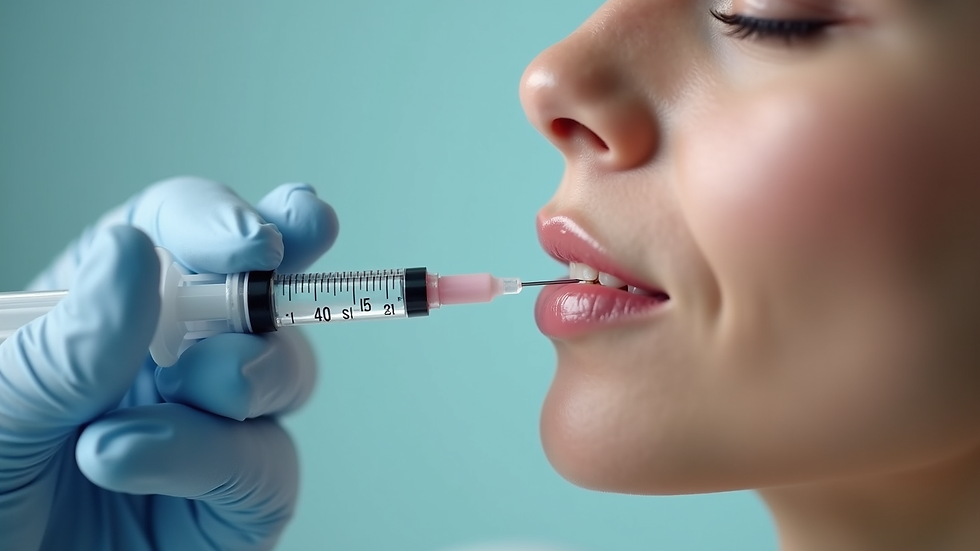
Numbing cream for 20 to 30 minutes, then a series of small injections — either as a fanning technique through a few entry points, or as a pattern of tiny bleb injections across the area. It takes about 20 to 30 minutes, and most patients describe brief stinging rather than pain.
Afterwards, expect small raised bumps at the injection points that settle within a few hours to a day, some redness, and occasional bruising — around the eyes, bruising is common enough that I always mention it. Downtime is genuinely minimal: 24 to 48 hours for most people. Skip make-up for the rest of the day, skip the gym, the sauna and alcohol for 24 hours.
Polynucleotides, skin boosters and mesotherapy are not the same thing
These three get used interchangeably online. They are not interchangeable.
Skin boosters — the hyaluronic acid type, such as Profhilo — mainly hydrate and give a mild fibroblast stimulus. The effect is largely water-driven and fades as the product is metabolised.
Mesotherapy delivers a tailored cocktail of vitamins, amino acids, peptides and hyaluronic acid superficially — good for glow, dullness and skin conditioning, with shorter-lived results.
Polynucleotides are a regenerative signal aimed at the cell that builds skin. Slower to show, longer to last.
In practice they combine well. A common plan is mesotherapy for immediate condition, polynucleotides for structural skin quality, and a biostimulator where support has been lost.
Who should not have them
Polynucleotides have a good safety record, but they are not for everyone. I would not treat you if you:
have a fish or seafood allergy — the source material is marine, and this is an absolute contraindication;
are pregnant or breastfeeding;
have an active skin infection, cold sore or inflamed acne in the treatment area;
have an autoimmune condition or are immunosuppressed, without specialist input;
are on anticoagulants that are not well controlled;
keep a vegan or vegetarian practice you would not want compromised — the product is animal-derived, and patients deserve to be told that before they are on the couch, not after.
Side effects are usually limited to bruising, swelling, tenderness and small lumps that resolve. Rarely, a persistent nodule or an infection can occur.
Why it matters who injects them
In the UK these treatments are not restricted to doctors, which is exactly why the question is worth asking. Polynucleotides are placed superficially, but the under-eye area is unforgiving: the skin is at its thinnest, the vessels sit close to the surface, and the margin for a badly placed injection is small.
At Dr Selvi Clinic every injection is performed by a registered doctor, with sterile technique. That matters less for the injection itself than for everything around it — judging whether polynucleotides are the right treatment at all, recognising when what looks cosmetic is actually medical, and being equipped to manage a complication rather than refer it on.
What the evidence actually shows
Polynucleotides are newer to UK aesthetics than the marketing suggests, but the underlying molecule is not new: PDRN has been used in wound care and tissue repair for decades, which is where most of the mechanistic work comes from. Published aesthetic studies are still relatively small and often industry-linked, and the strongest data sits in skin quality, hydration and elasticity measures rather than in dramatic before-and-after photographs.
My reading of it is straightforward: the mechanism is sound, the safety profile is good, and the realistic outcome is skin that looks better lit and better hydrated with finer texture. It is not a lift. Any clinic showing you a jawline transformation and crediting polynucleotides is showing you something else.
How a course is planned at the clinic
We start by separating the three things patients tend to bundle together: skin quality, volume, and pigment. Polynucleotides address the first. If your assessment shows the main issue is volume loss or shadowing, spending £600 on a regenerative course will leave you underwhelmed, however well it is performed.
Where polynucleotides are the right call, we agree the number of sessions and the review point up front — usually a photographic review four weeks after the final session, in the same lighting. Skin changes are gradual enough that people genuinely forget their starting point, and a standardised photograph is the only fair way to judge whether the course earned its cost.
Common questions
Are polynucleotides better than filler under the eyes?
For thin, crepey, dull under-eye skin — often yes, and with far less risk of puffiness or the Tyndall effect. For a true hollow with good skin quality, filler still does something polynucleotides cannot. Many patients need one, not both.
How long do the results last?
Around six to nine months after a full course, depending on the area, your age and your skin's baseline. It is a maintenance treatment, not a one-off.
Do polynucleotides help dark circles?
Only where the darkness comes from thin, translucent skin. If it is pigmentation or a structural shadow, this treatment will underdeliver — a proper assessment tells us which one you have.
Can I have them with anti-wrinkle injections or Plexr?
Yes, with sensible sequencing. We would not treat skin that is actively healing from plasma treatment, but the two work well in a planned order.
Not sure whether polynucleotides are what your skin needs?
That is exactly what a consultation is for. At Dr Selvi Clinic, 57B London Road, Brighton and Hove BN1 4JE, we assess skin quality, volume and pigment separately — and tell you what you do not need yet. See fees on our pricing page or book a free initial consultation. Open daily, 10am to 8pm.
Comments